The Results Were Unexpected When AI Met Human Expertise
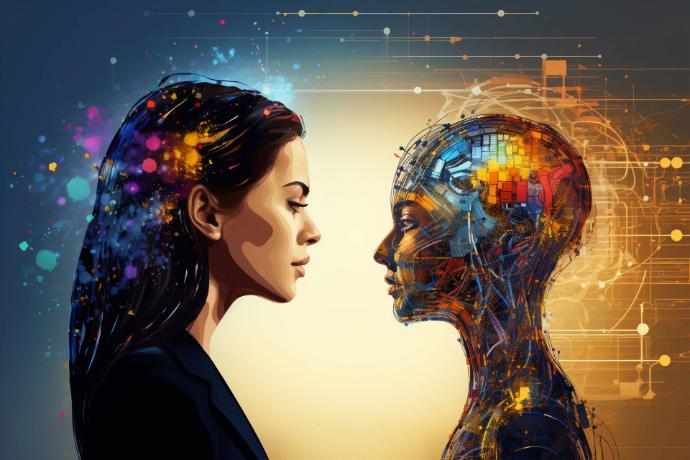
Artificial Intelligence (AI) is no longer a futuristic concept—it is a part of everyday life. From answering questions online and recommending products to automating business processes and assisting with research, AI is transforming the way people work, communicate, and make decisions.
As AI becomes increasingly capable, a common question arises:
Can AI replace humans?
The answer is more nuanced than a simple yes or no. Rather than viewing AI and humans as competitors, it is more valuable to understand their unique strengths and explore how they can work together to achieve better outcomes.
What AI Does Best
AI excels at processing and analyzing large amounts of information quickly and efficiently. It can identify patterns, automate repetitive tasks, and generate insights in seconds—often at a scale impossible for humans.
Some of AI's key strengths include:
Processing vast amounts of data rapidly
Automating routine and repetitive tasks
Generating reports, summaries, and content drafts
Providing customer support through chatbots and virtual assistants
Assisting with research and information gathering
Because AI can operate continuously without fatigue, it helps organizations improve productivity, reduce manual effort, and streamline operations.
What Humans Do Best
While AI is powerful, humans possess abilities that technology cannot fully replicate.
People can understand emotions, build meaningful relationships, think creatively, make ethical judgments, and navigate situations where there are no clear rules or predefined answers.
Human strengths include:
Creativity and innovation
Emotional intelligence and empathy
Critical thinking and problem-solving
Leadership and strategic decision-making
Understanding context, culture, and human behavior
These uniquely human qualities enable people to solve complex challenges, inspire others, and create meaningful experiences that extend far beyond data and algorithms.
A Practical Example
Consider a scenario where both AI and a human are asked to write a message to a customer.
An AI system can generate a well-structured response within seconds by analyzing available information and language patterns.
A human, however, can consider the customer's emotions, past interactions, tone, and unique circumstances before deciding how best to communicate.
The strongest outcome often comes from combining both approaches. AI can create an initial draft, while the human refines, personalizes, and ensures the message aligns with the customer's needs.
This collaboration saves time while preserving authenticity and empathy.
Key Findings from User Experiences
1. Speed: AI Has a Clear Advantage
AI consistently completes tasks significantly faster than humans. For example, a product description that may take a person 10–15 minutes to write can often be generated by AI in just a few minutes.
For routine content creation and administrative tasks, AI acts as a highly efficient productivity tool.
2. Accuracy and Consistency: AI Performs Well
For structured tasks such as summarizing information, organizing content, or performing calculations, AI often produces accurate and consistent results.
Its ability to follow patterns and maintain formatting makes it particularly effective for repetitive, data-driven work.
3. Creativity and Emotional Depth: Humans Lead
When tasks require originality, storytelling, humor, empathy, or emotional connection, humans continue to outperform AI.
While AI can generate creative content, its output is often based on existing patterns and may sometimes feel predictable or generic. Human creativity, on the other hand, is shaped by personal experiences, emotions, and imagination.
4. User Satisfaction
Many users report feeling more productive when working with AI because it reduces time spent on repetitive tasks.
At the same time, people often value human-created work for its authenticity, personality, and emotional resonance. This highlights the importance of maintaining a balance between efficiency and human expression.
5. The Hybrid Approach Produces the Best Results
The highest-quality outcomes frequently emerge when humans and AI collaborate.
Users often rely on AI for research, brainstorming, or first drafts, then apply their own expertise, creativity, and judgment to refine the final result.
This combination leverages the strengths of both human intelligence and artificial intelligence.
Common Misconceptions About AI
One of the most widespread concerns is that AI will completely replace human workers.
History suggests a different outcome. Technological advancements have consistently automated certain tasks while creating new opportunities, industries, and roles.
AI is likely to follow a similar path. Rather than eliminating the need for people, it is reshaping how work is performed. By handling repetitive and data-intensive tasks, AI enables individuals to focus on areas that require creativity, communication, leadership, and strategic thinking.
The Future: Collaboration Over Competition
The future is not about choosing between AI and humans—it is about maximizing the strengths of both.
Organizations that successfully adopt AI typically view it as a tool that empowers employees rather than replaces them. When used effectively, AI can enhance productivity, support better decision-making, and free people to focus on higher-value work.
The most successful individuals and organizations will be those that learn how to combine human insight with AI-driven capabilities.
Conclusion
AI is fast, scalable, and highly efficient. Humans are creative, adaptable, empathetic, and capable of complex judgment.
Each brings unique strengths that the other cannot fully replace.
Instead of asking whether AI will replace humans, a more important question is:
How can humans and AI work together to achieve better results?
As technology continues to evolve, the future will belong not to AI alone or humans alone, but to those who can effectively harness the power of both.
The future of work may not belong to AI alone or humans alone but to those who learn how to combine the strengths of both.
Technology works best when it enhances human capabilities rather than attempts to replace them.