HVAC (Heating, Ventilation, and Air Conditioning) Workflow Guide
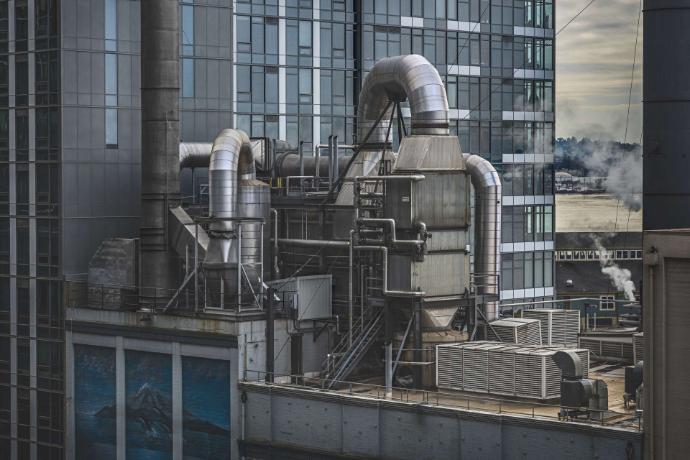
The HVAC Project and Service Management Workflow is the backbone of any successful heating, ventilation, and air conditioning business. It brings together every step—from the moment a customer reaches out until the job is fully completed and closed. Whether it’s a large installation project, routine maintenance, or an urgent repair, a clear workflow helps teams stay organized, control costs, deliver quality work, and keep customers satisfied.
Why a Structured Workflow Matters
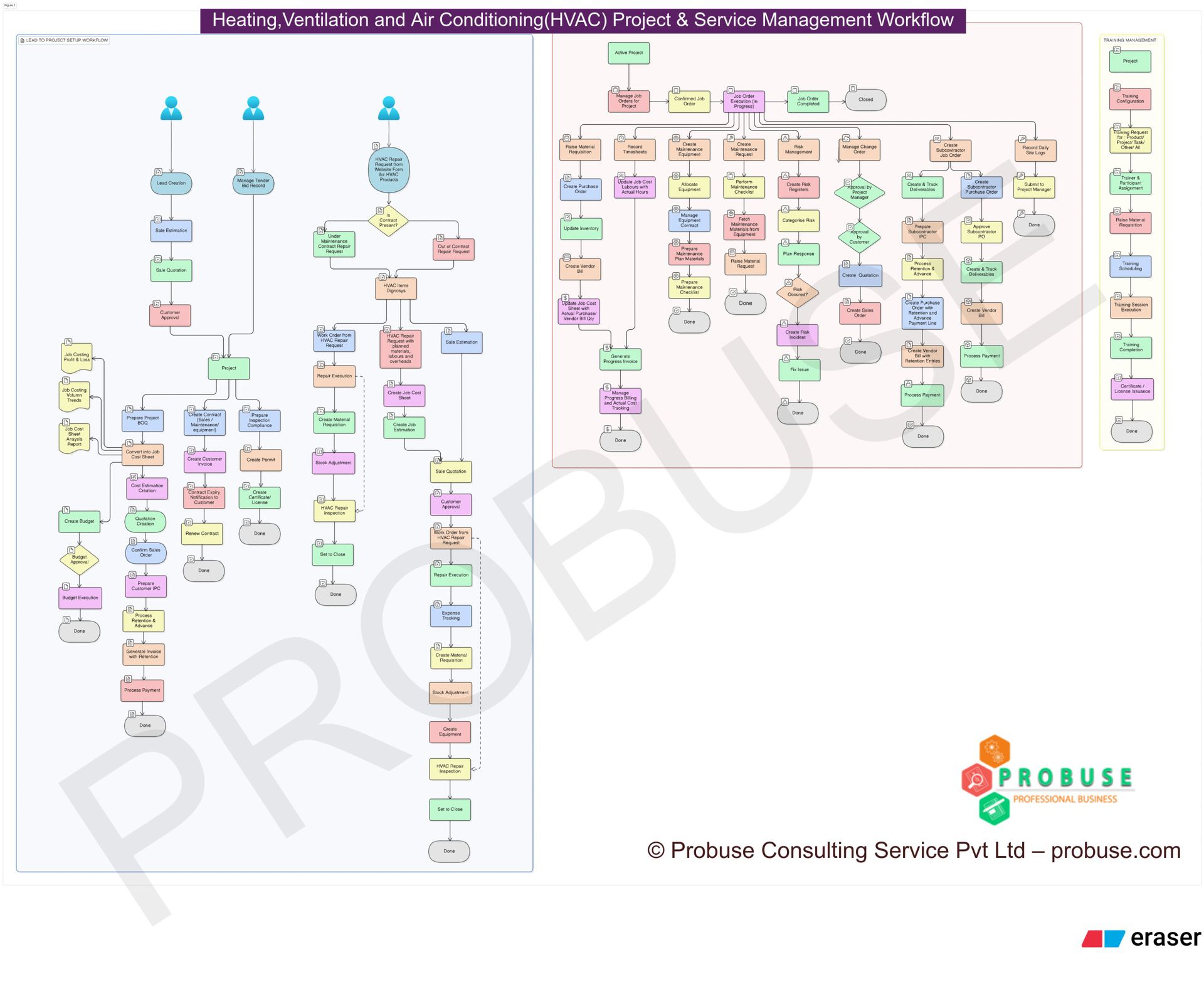
The HVAC Project and Service Management Workflow represents the complete lifecycle of HVAC contracting and service operations, starting from initial customer inquiry or service request and continuing through estimation, project planning, procurement, execution, subcontractor coordination, financial tracking, IPC billing, and project closure. This workflow integrates sales, project management, maintenance, inventory, finance, and service operations into a unified system, ensuring smooth coordination and efficient execution of HVAC projects and services. In addition, the workflow incorporates a structured repair management process that supports both contract-based (unpaid) and non-contract (paid) repair requests, ensuring proper handling of service scenarios based on contract coverage and billing conditions.
The workflow begins with the Lead to Project Setup process, where opportunities are captured through customer inquiries, website forms, or service requests. At this stage, the service or sales team performs HVAC inspection, system diagnosis, and site evaluation to understand customer requirements. For repair-specific requests, the system evaluates whether the request is covered under an active AMC/warranty contract or falls outside the contract scope. This classification determines whether the repair will follow an unpaid (contract-covered) flow or a paid service flow. Based on this analysis, a detailed estimation is prepared, and a sales quotation is generated covering materials, labour, and service costs. In case of paid (non-contract) repairs, quotation and customer approval are mandatory, whereas for unpaid (contract-based) repairs, the system can bypass the quotation stage or generate it only for non-covered components. Once the customer approves the quotation, it is converted into a sales order, and the system proceeds to create the HVAC project or service job.
After project creation, the system manages key setup activities such as contract creation, customer agreements, and compliance preparation. HVAC projects often involve installation, repair, or maintenance services, so service contracts and billing terms are clearly defined. For repair workflows, contract validation ensures that SLA terms, coverage limits, and response timelines are enforced before execution begins. A detailed job cost sheet is prepared including material, labour, and overhead costs. Budget planning is carried out and approved to ensure financial control, enabling continuous tracking of planned versus actual costs throughout the project lifecycle.
Once the project setup is completed, the workflow moves into procurement and resource planning. Material requirements are identified and material requisitions are generated. These are converted into purchase orders after vendor selection and approval. Inventory is updated upon receipt of materials, and vendor bills are recorded. Job costs are automatically updated based on purchased quantities and vendor billing, ensuring accurate cost tracking. For repair jobs, this stage ensures quick availability of spare parts either through stock or urgent procurement, minimizing downtime for critical equipment.
The execution phase focuses on HVAC installation, repair, and maintenance activities. Job orders are created to manage field operations, including technician assignments, material usage, and service execution. In repair scenarios, job orders are directly linked to service requests and include diagnosis details, repair scope, and contract reference (if applicable). Timesheets are recorded to capture labour effort, and expenses related to service activities are logged. Equipment and maintenance management ensures proper tracking of service history, inspections, and preventive maintenance schedules.
During execution, the workflow incorporates risk management and change management processes. Any risks, breakdowns, or service issues are recorded and monitored. In case of additional repair requirements beyond the initial diagnosis, especially for paid jobs, a revised estimation or change order is generated and must be approved before proceeding. For contract-based repairs, any out-of-scope work is separately identified and can be converted into a billable component. If there are changes in scope, materials, or cost, a formal change order process is followed, requiring approvals before implementation. This ensures proper control, transparency, and alignment with customer agreements.
The workflow includes a flexible subcontractor management process that supports two financial approaches based on the project requirement and contract type. Subcontractors are assigned through job orders to handle specialized HVAC activities, and their work progress is tracked within the project. This is also applicable in complex repair cases where specialized technicians or external vendors are required. For long-term or progress-based work, the system uses a Vendor IPC (Interim Payment Certificate) flow, where completed work is certified through IPCs, approved, and then converted into vendor bills with applicable retention and advance adjustments before payment. Alternatively, for fixed-scope or short-term tasks, a standard Purchase Order to Vendor Bill flow is followed, where a purchase order is issued, and vendor bills are generated based on delivered services or quantities and validated against the PO before payment. This dual approach ensures flexibility, accurate cost tracking, and proper financial control for all types of subcontractor engagements within HVAC projects and repair services.
For customer billing, the workflow supports Customer IPC (Sales IPC) for progress-based invoicing. As HVAC project work progresses, Customer IPCs are created to record completed work quantities, milestones, or service deliverables. These IPCs are reviewed and approved by the project manager and, if required, the customer. Based on approved IPCs, progress invoices are generated. Retention and advance deductions are applied as per contract terms, ensuring accurate and contract-compliant billing. For repair-specific billing, paid service requests generate invoices based on approved quotations or completed job orders, while unpaid contract-based repairs may not generate invoices unless additional non-covered work or materials are involved.
Financial tracking is continuously managed throughout the project lifecycle. Customer invoices, vendor bills, labour costs, and overhead expenses are recorded against the job cost sheet. The system compares actual costs with the planned budget to monitor profitability and financial performance. Payment processing for both customers and vendors ensures smooth cash flow management. Even for unpaid repairs, internal cost tracking is maintained to evaluate contract profitability and service efficiency.
Daily operations are tracked through service logs and activity records, where technicians and project teams record daily work progress, inspections, and issues. For repair jobs, detailed service logs capture fault details, actions taken, parts replaced, and final resolution status, ensuring complete service traceability. This ensures transparency, accountability, and proper documentation of HVAC service and installation activities.
In addition to operational and financial management, the workflow integrates a training management system to ensure workforce readiness and compliance in HVAC projects. Training managers can configure programs focused on HVAC installation, maintenance procedures, safety standards, and equipment handling requirements. Training requests are generated for technicians, supervisors, and subcontractors involved in the project and repair activities. Trainers and participants are assigned, sessions are scheduled, and training activities are monitored throughout execution to ensure proper completion.
Once the training sessions are completed, the system records outcomes and issues certificates or licenses to participants who successfully meet the required criteria. This ensures that all personnel involved in HVAC installation, repair, and maintenance activities comply with safety regulations and possess the necessary technical skills before performing critical tasks.
Finally, once all HVAC work including repair activities is completed, the project or job undergoes final inspection and quality validation. For repair workflows, this includes verification of issue resolution, customer confirmation, and service sign-off. The project or job is then marked as completed, and all financial transactions are finalized and posted in accounting. Reports such as job cost analysis, IPC summaries, profitability reports, and service performance evaluations are generated. The workflow concludes with project or service closure, providing insights that help improve planning, execution, and financial management for future HVAC projects and repair operations.
Understanding the HVAC Workflow in Simple Steps
Starting with the Customer Need
Everything begins when a potential customer makes an inquiry — through a phone call, website form, email, or a direct service request for repair. The team visits the site to inspect the HVAC (Heating, Ventilation, and Air Conditioning) system, understand the problem, and gather all necessary details.
For repair requests, the first important check is whether the work is covered under an active maintenance contract (AMC or warranty) or if it’s a paid service outside the contract. This decision shapes the entire process. Paid repairs usually require a clear quotation and customer approval, while contract-covered repairs often move faster with simplified steps.
Once the scope is clear, a detailed estimation is prepared, a quotation is shared, and after customer approval, the job is converted into a sales order and turned into an official HVAC project or service task.
Setting Up the Project
With approval in place, proper planning begins. A project is created along with service contracts, compliance documents, and a detailed job cost sheet. A budget is prepared and approved so the team can track planned versus actual costs from the beginning.
Procurement and Resource Planning
HVAC work needs the right materials at the right time. The workflow helps identify requirements, create purchase orders, update inventory, and record vendor bills. For repair jobs, quick access to spare parts is critical to reduce equipment downtime and keep customers happy.
Execution – Where the Work Happens
This is the heart of the HVAC Service Management Workflow. Technicians receive clear job orders with tasks, materials, and instructions. Timesheets, material usage, and expenses are recorded properly. If any changes or extra repairs are needed, a formal change order process ensures everything is approved before proceeding.
Subcontractors are managed flexibly using either standard purchase orders or Interim Payment Certificate (IPC) methods, depending on the project.
Billing and Financial Control
For larger projects, progress billing is done through Customer IPCs. For repair jobs, invoices are generated based on approved quotations or completed work. All costs are tracked against the job cost sheet, helping maintain healthy cash flow and project profitability.
Daily Tracking and Documentation
Good workflows emphasize clear records. Technicians and supervisors log daily activities, inspections, issues faced, and solutions applied—especially important in repair cases where fault details, replaced parts, and final resolution must be documented. This creates a complete service history for the equipment and builds trust with customers.
Training and Skill Development
To ensure safety and quality, the workflow includes training programs for installation, maintenance, and safety procedures. Technicians and subcontractors receive proper training and certificates before working on site.
Closing the Job
The final step includes thorough inspection and quality checks. For repair jobs, this means confirming the issue is fully resolved and getting customer sign-off. Once verified, the job is closed, financial entries are completed, and reports are generated to learn from each project.
Final Inspection and Closure
Once the work is completed, the final step is inspection. The system is checked to ensure everything is working properly and meets the required standards. For repair jobs, this also includes confirming that the issue has been fully resolved.
After verification, the job is closed. All financial records are completed, and reports are generated. These reports provide insights into cost, performance, and overall execution, which can help improve future projects.
Conclusion
The HVAC project and service management workflow is a complete journey that connects many different activities into one smooth process. From the first customer request to the final closure, each step plays an important role in ensuring successful execution.
When this workflow is followed properly, it brings better organization, improved cost control, and higher service quality. More importantly, it makes the entire process easier to understand and manage for everyone involved.
The biggest improvement we saw was in cost tracking. With proper workflow management, we can now clearly see where money is spent and how each project performs.
The biggest improvement we saw was in cost tracking. With proper workflow management, we can now clearly see where money is spent and how each project performs.
Managing repair requests used to be chaotic, especially with contract and non-contract jobs. A proper workflow helped us handle everything smoothly and improve response time.
Managing repair requests used to be chaotic, especially with contract and non-contract jobs. A proper workflow helped us handle everything smoothly and improve response time.
Ready to streamline your HVAC business?
Our experts at Probuse Consulting Service Pvt. Ltd. can help you implement a complete, practical solution tailored for HVAC contracting and service management.
📞 Get in Touch Today WhatsApp: +91 960 111 9434 | +91 787 454 3092 Email: contact@probuse.com